Did the robot finish?
RoboJev is an open vision-language model that reads a robot attempt and predicts whether the task was completed.
Task Insert the colourful ring into the central wooden peg.
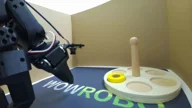
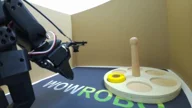
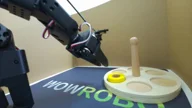
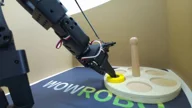
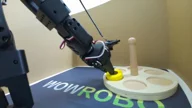
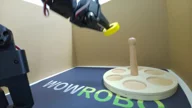
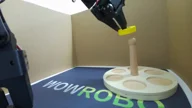
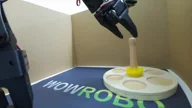
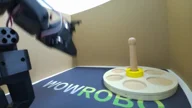
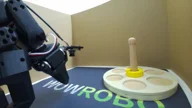
Recorded model result · ten front-camera frames · task held out from training. View receipt.
See inputs, costs and all results.
Watch the launch
A robot attempt, the frames that go in, and the answer that comes out.
One task,
ten frames.
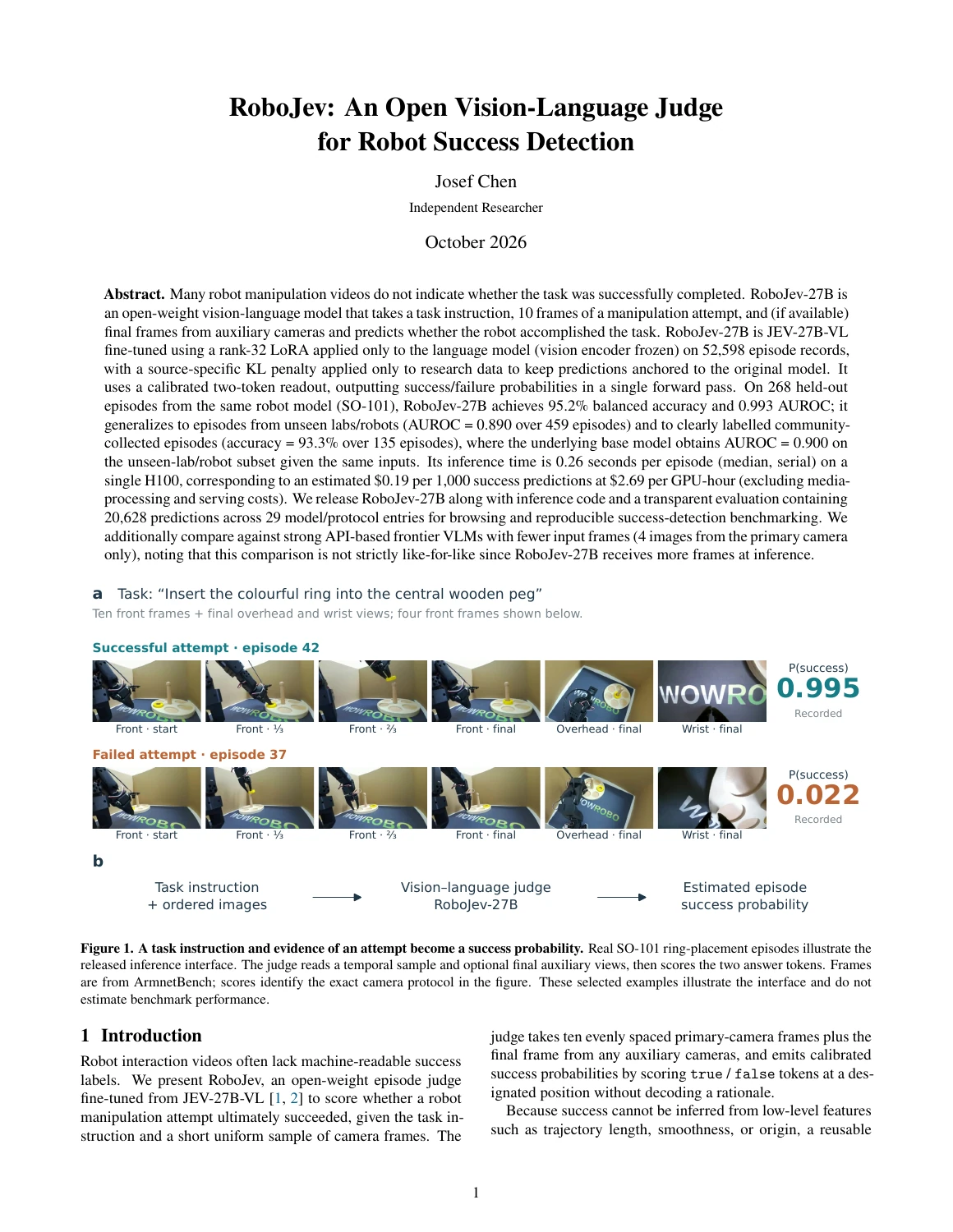
Give RoboJev the task and ten frames from the whole attempt, plus the final view from any other cameras. It returns a calibrated probability that the task was completed.
The two ring attempts below were held out from training. With all three views, the released checkpoint scores them 0.995 and 0.022.
Try an attempt yourself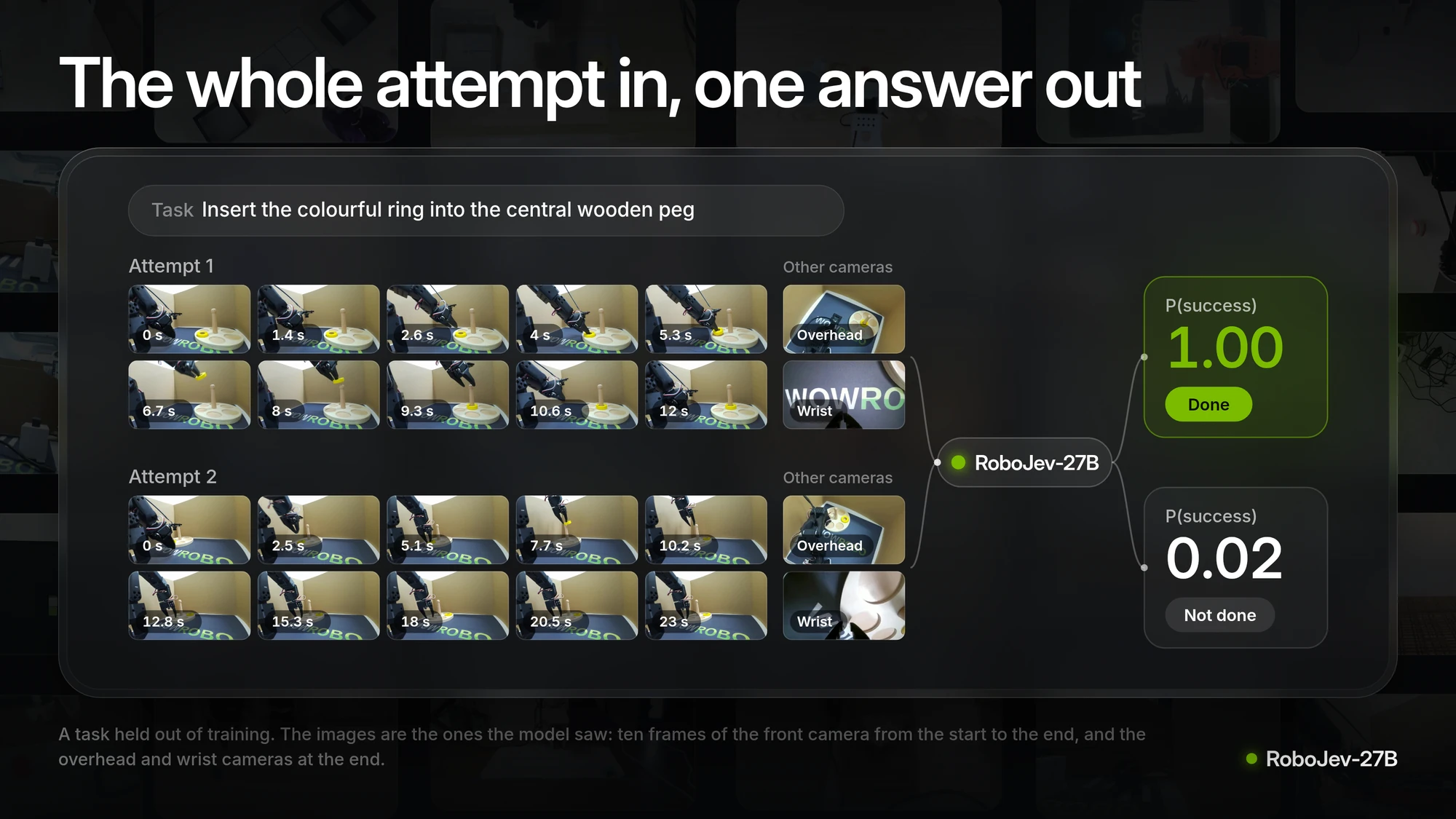
Compare the answers
The original glass charts, with the recorded data behind every number.
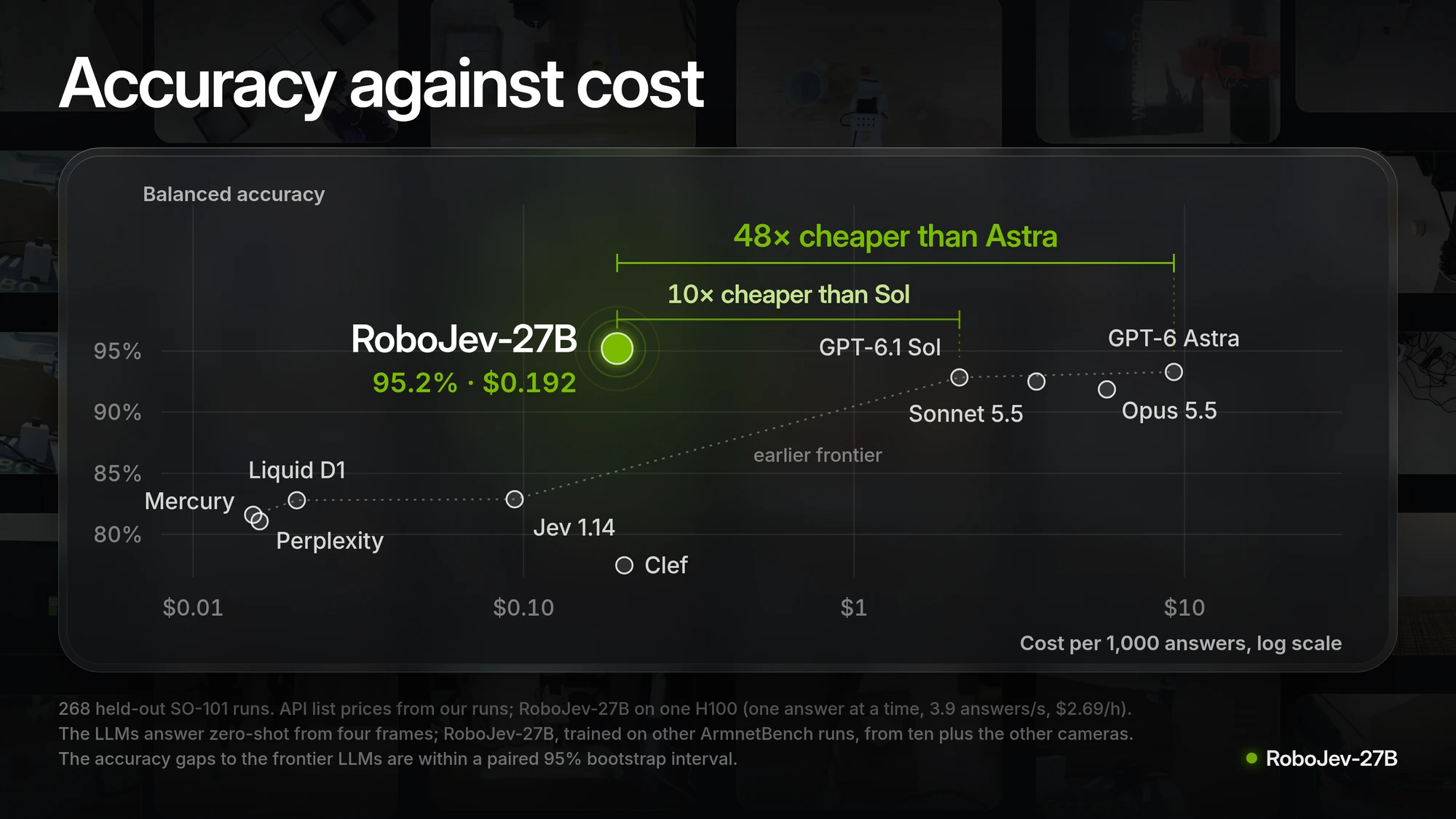
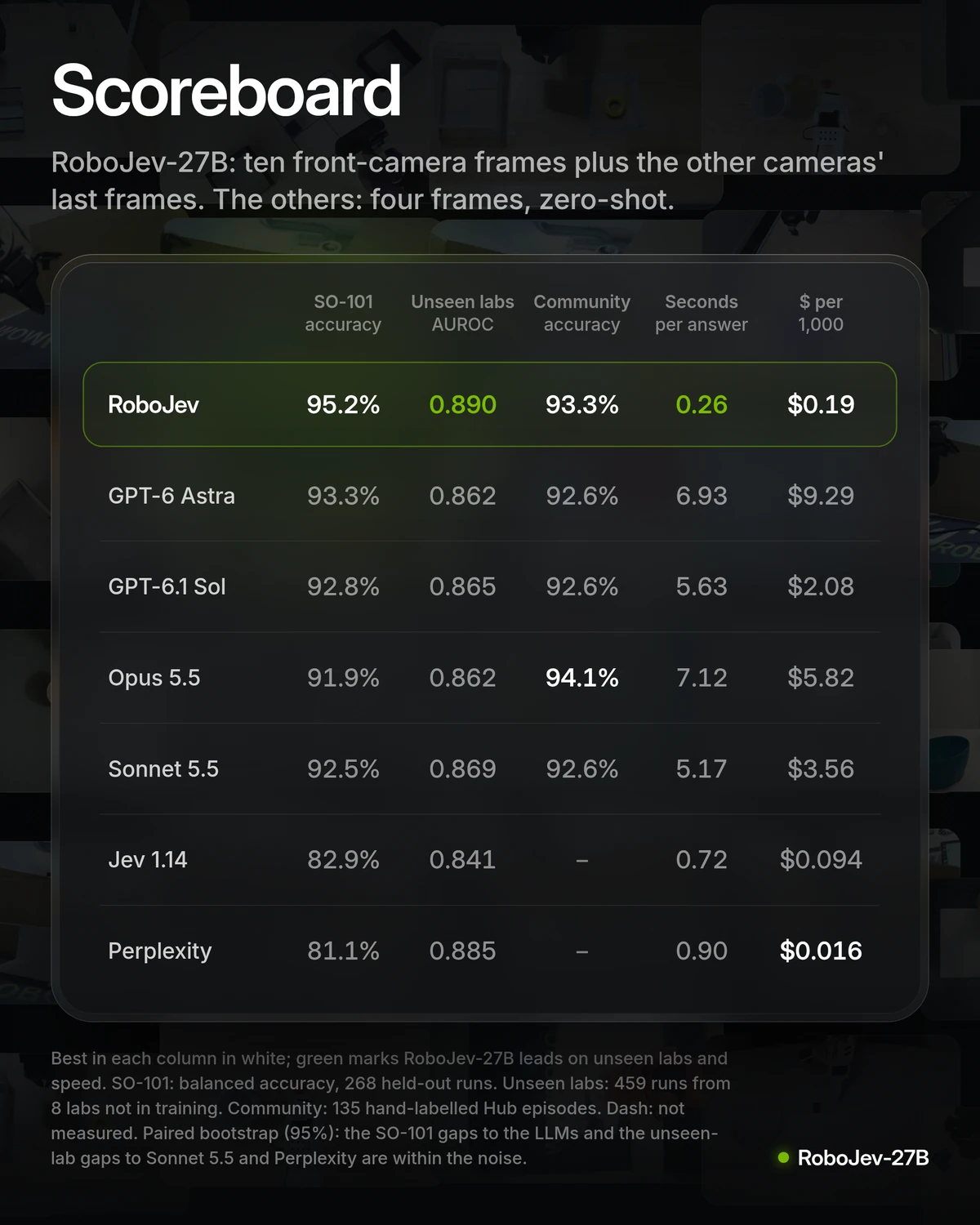
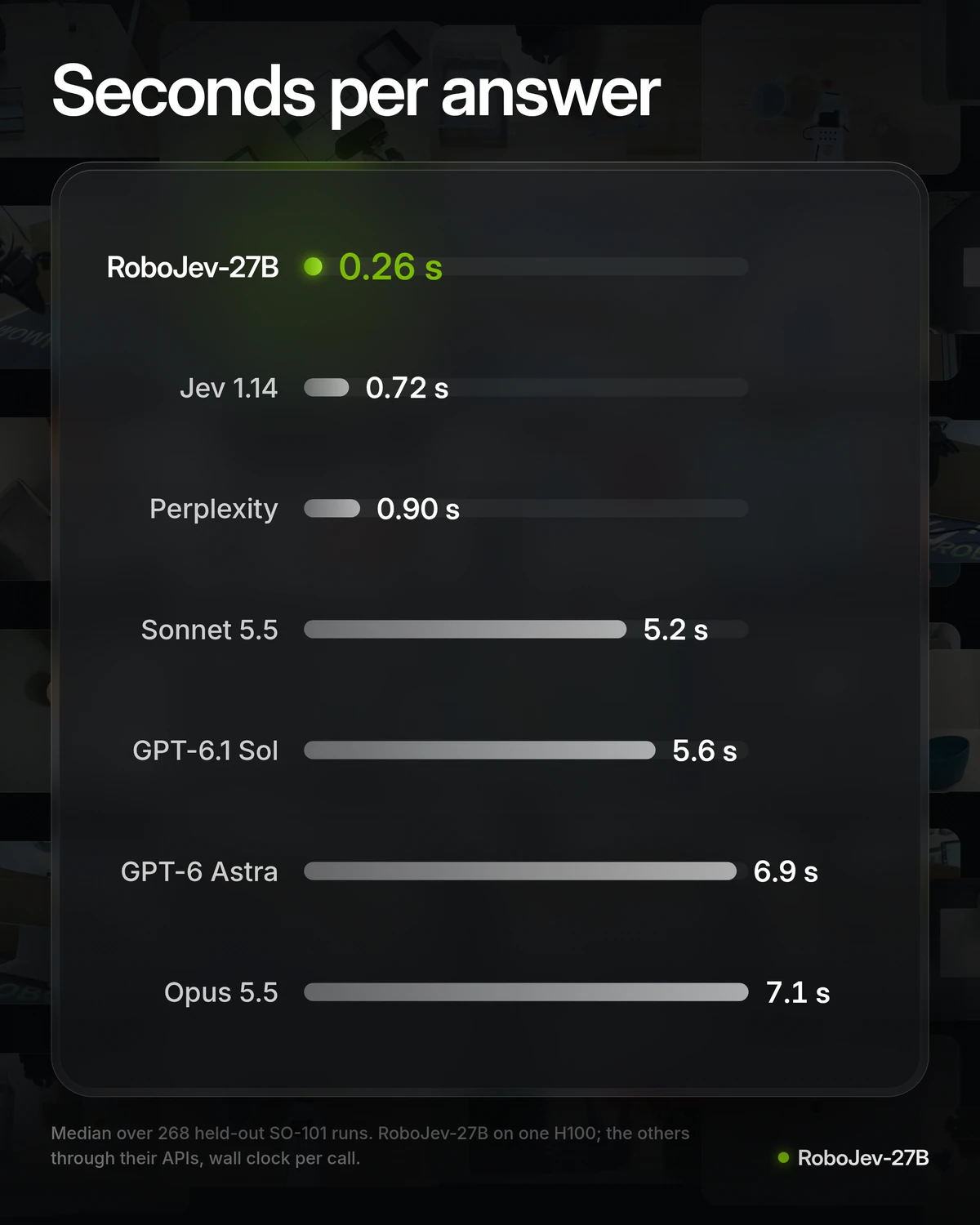
The input protocols differ. Released RoboJev reads ten frames plus available final views. The recorded frontier-model runs used four front-camera frames. The explorer identifies every protocol.
The comparisons have limits. The SO-101 gap versus Astra includes a tie. The ten-frame base JEV scores 0.900 unseen-lab AUROC versus RoboJev’s 0.890. RoboJev does not lead every metric.
Open the full comparison: all 29 model/protocol entries
Loading recorded results…
Billions of
robot hours
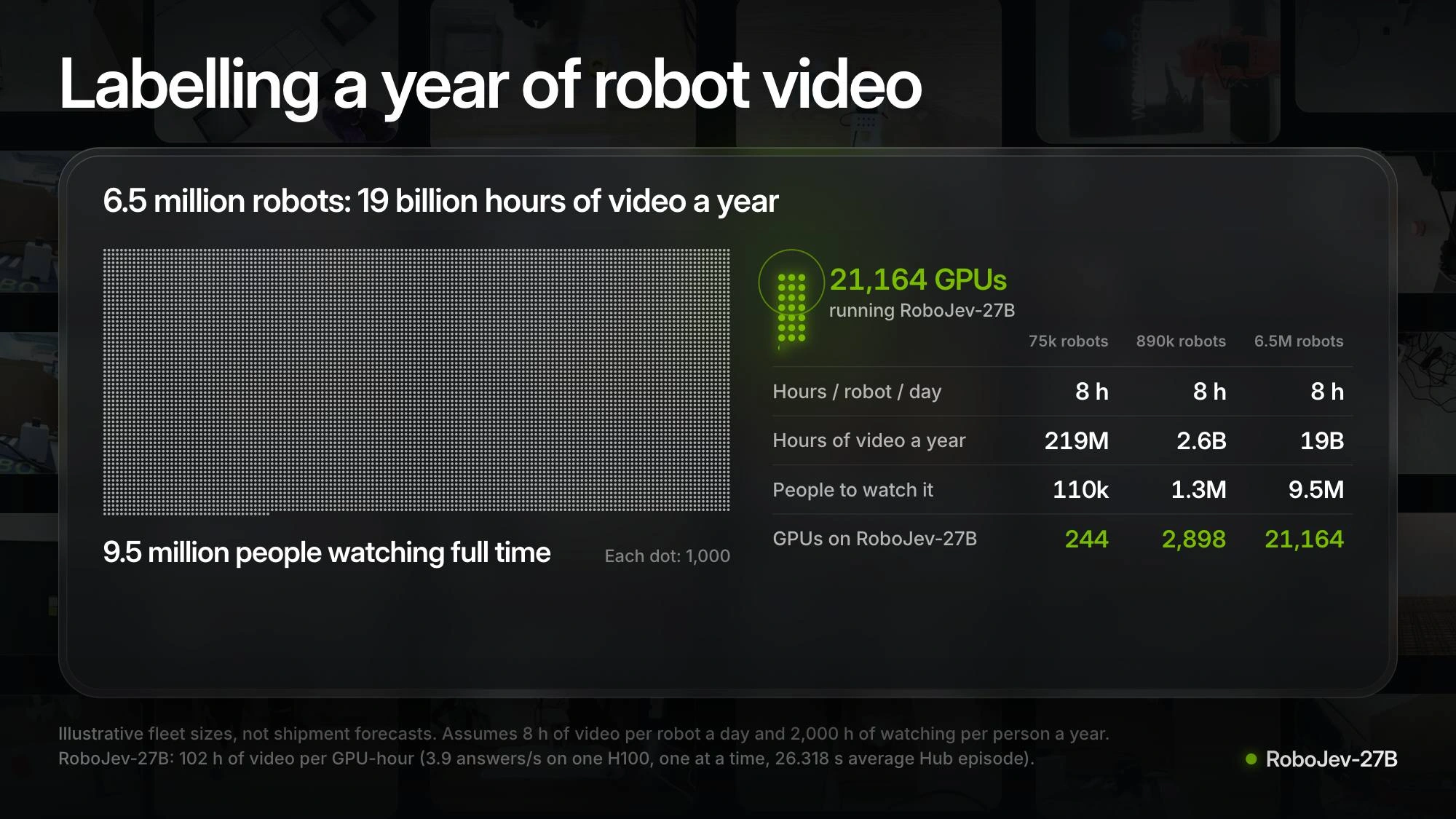
A million robots recording eight hours a day would produce 2.92 billion hours of video a year.
That is a scale scenario, not a shipment forecast. The chart sets out what different fleet sizes would mean for human viewing and automated scoring.
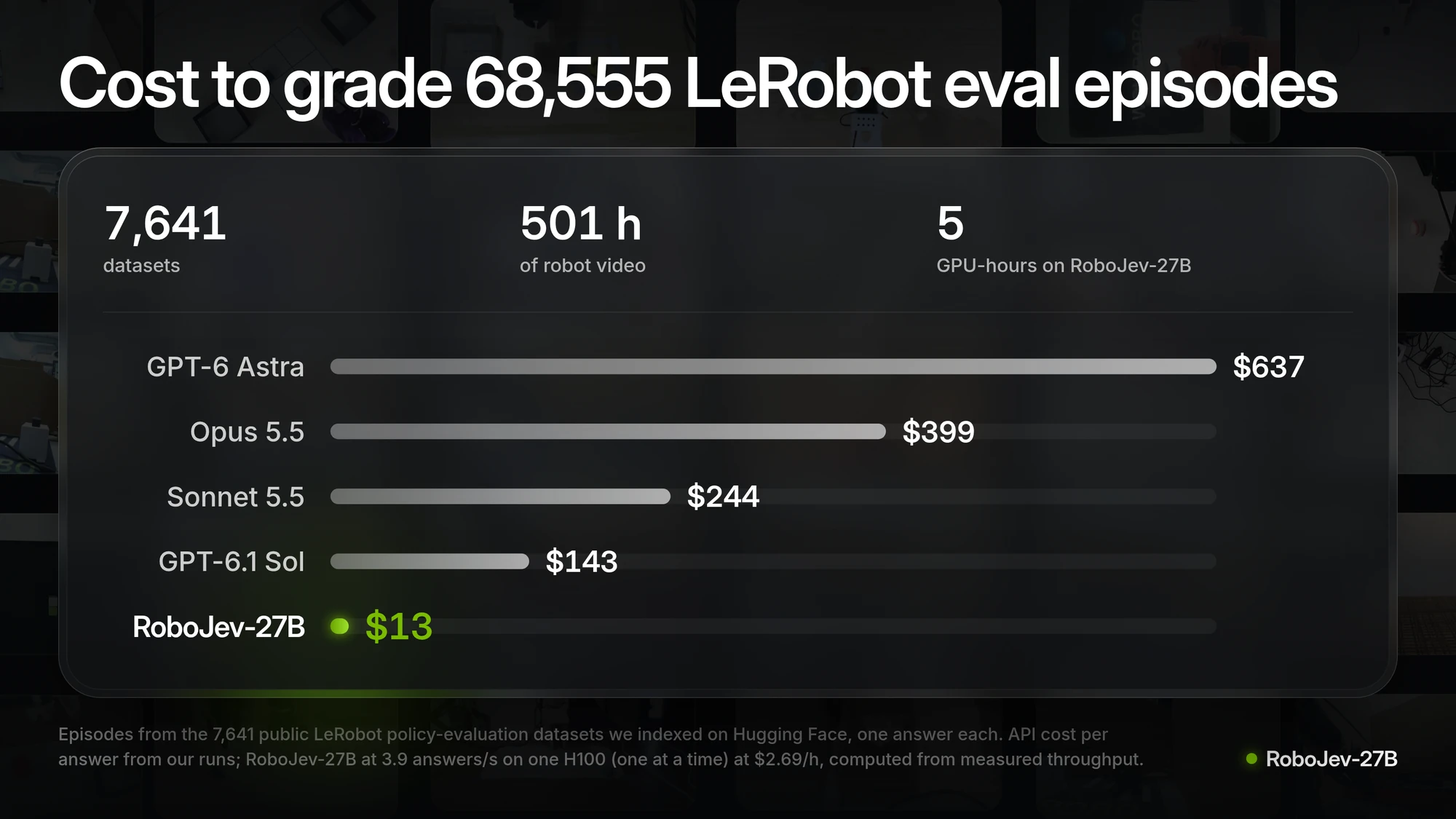
Read the research
Training, input protocols, held-out tasks, uncertainty, and where the model gets things wrong.
RoboJev starts from JEV-27B-VL and is fine-tuned with LoRA on 52,598 robot episodes. The weights, evaluation data, LeRobot reward plugin and video overlay code are open.
Read the paper